The essential guide to Venice
Top Attractions in Venice
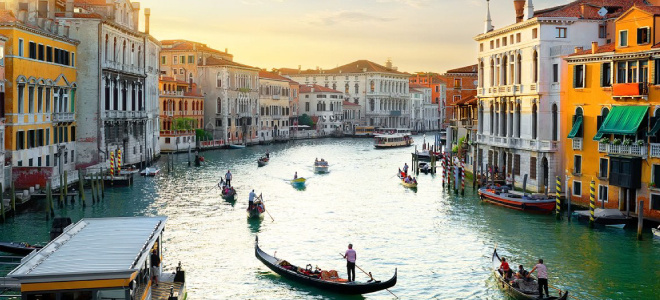
Venice is truly one of a kind. It was the capital of the Most Serene Republic of Venice for more than 1,100 years and, together with its lagoon, is recognized as a UNESCO World Heritage Site. According to tradition, Venice was founded on 25 March 421. Built on 118 small islands, connected by 435 bridges and crossed by 176 canals, the city has, since its origins, been divided into six historic districts known as sestieri: San Marco, San Polo, Dorsoduro, Cannaregio, Castello, and Santa Croce. In this guide, you'll discover Venice's most iconic attractions and must-see landmarks. To truly experience them all at a relaxed pace, we recommend planning at least three separate stays in this extraordinary city.
St. Mark's Square
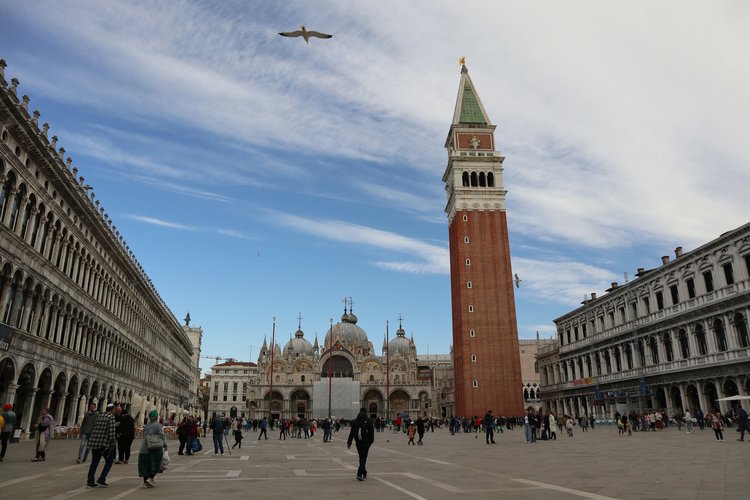
St. Mark's Square is one of the world's most famous landmarks. It is the only true "piazza" in Venice—all other open squares in the city are called campi, campielli, or corti. Often referred to as "The Drawing Room of Europe" or "The Venetians' Living Room," it has been the setting for the city's most important political and religious ceremonies throughout history. As the lowest point in Venice, St. Mark's Square is also the first area to flood during periods of high tide (acqua alta). The square is divided into three distinct areas: St. Mark's Square (Piazza) – the main square, enclosed by the Old, New, and Napoleonic Procuratie, St. Mark's Basilica, and the Campanile (Bell Tower). St. Mark's Piazzetta – stretching from the waterfront entrance, marked by the Columns of St. Mark and St. Theodore, to the Doge's Palace and the Library. Historically, this was the city's ceremonial gateway from the sea, providing access to the two centres of power: the political seat at the Doge's Palace and the religious heart at St. Mark's Basilica. Piazzetta dei Leoncini – located beside the Basilica, this small square takes its name from the two marble lion cubs resting there. Today, the area is dedicated to Pope John XXIII. This version reads naturally for an international travel guide while preserving all the historical information.
St. Mark's Basilica
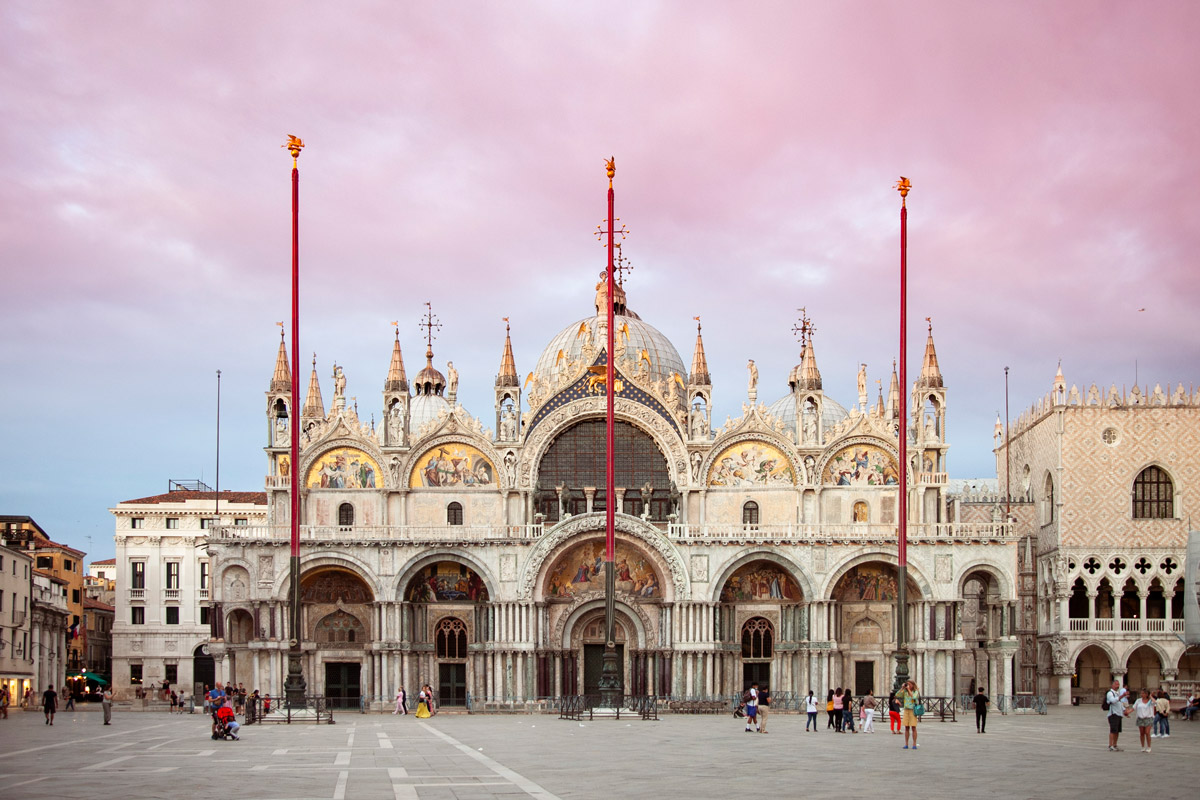
Located in the heart of St. Mark's Square, St. Mark's Basilica is one of the greatest masterpieces of medieval architecture and a symbol of both Venice and Christianity. Blending Byzantine, Gothic, and Italian architectural styles, it perfectly reflects the centuries-long connection between East and West that made Venice one of the world's most influential maritime republics. The first church dedicated to St. Mark the Evangelist was built in 820 by Doge Giustiniano Partecipazio, next to the Doge's Palace, to house the relics of the saint. According to tradition, the relics were secretly brought from Alexandria, Egypt, by two Venetian merchants, Buono da Malamocco and Rustico da Torcello. In 832, the church was consecrated, and St. Mark became the patron saint of Venice, replacing St. Theodore, the city's previous protector. The present basilica was begun in 1063 under Doge Domenico Contarini, replacing the earlier church. Inspired by the great churches of Constantinople, particularly the Church of the Holy Apostles and Hagia Sophia, it became the official State Church of the Republic of Venice. Unlike most churches, it did not fall under the authority of the Patriarch but was administered directly by the Doge through the prestigious Procurators of St. Mark, an institution that still exists today. The basilica's exterior is divided into three levels: the ground floor, the terrace, and the domes. Its broad façade, designed to distribute weight across Venice's fragile foundations, features more than 400 architectural elements. Five magnificent portals lead into the Narthex, while above them stretches a terrace with a central loggia that once displayed the famous Horses of St. Mark. These four magnificent gilded bronze horses were brought to Venice after the Fourth Crusade in 1204, having been taken from the Hippodrome of Constantinople. They are considered the only surviving ancient quadriga in the world. To protect the originals, they have been displayed inside the St. Mark's Museum since the restoration completed in 1977, while faithful replicas now stand on the basilica's façade. Inside, the basilica follows a Latin-cross plan crowned by five majestic domes. More than 8,000 square metres of golden mosaics cover its walls and ceilings, creating one of the most spectacular interiors in the world. Rich marble columns, precious stones, and exquisite Byzantine decorations fill every corner with extraordinary beauty. Separating the nave from the sanctuary is the magnificent iconostasis, adorned with statues of the Twelve Apostles, a masterpiece of Gothic sculpture by Jacobello and Pier Paolo delle Masegne. Behind the High Altar stands the breathtaking Pala d'Oro, an extraordinary Byzantine altarpiece decorated with more than 80 enamel panels and hundreds of precious gems, regarded as one of the finest works of medieval goldsmithing in existence. Beneath the altar rest the relics of St. Mark the Evangelist. Among the basilica's many treasures is the magnificent ciborium, supported by four richly carved columns and decorated with rare green marble from Thessaly. A visit to St. Mark's Basilica is far more than a sightseeing stop—it is an unforgettable journey through over a thousand years of Venetian history, art, faith, and architectural brilliance.
St. Mark's Bell Tower
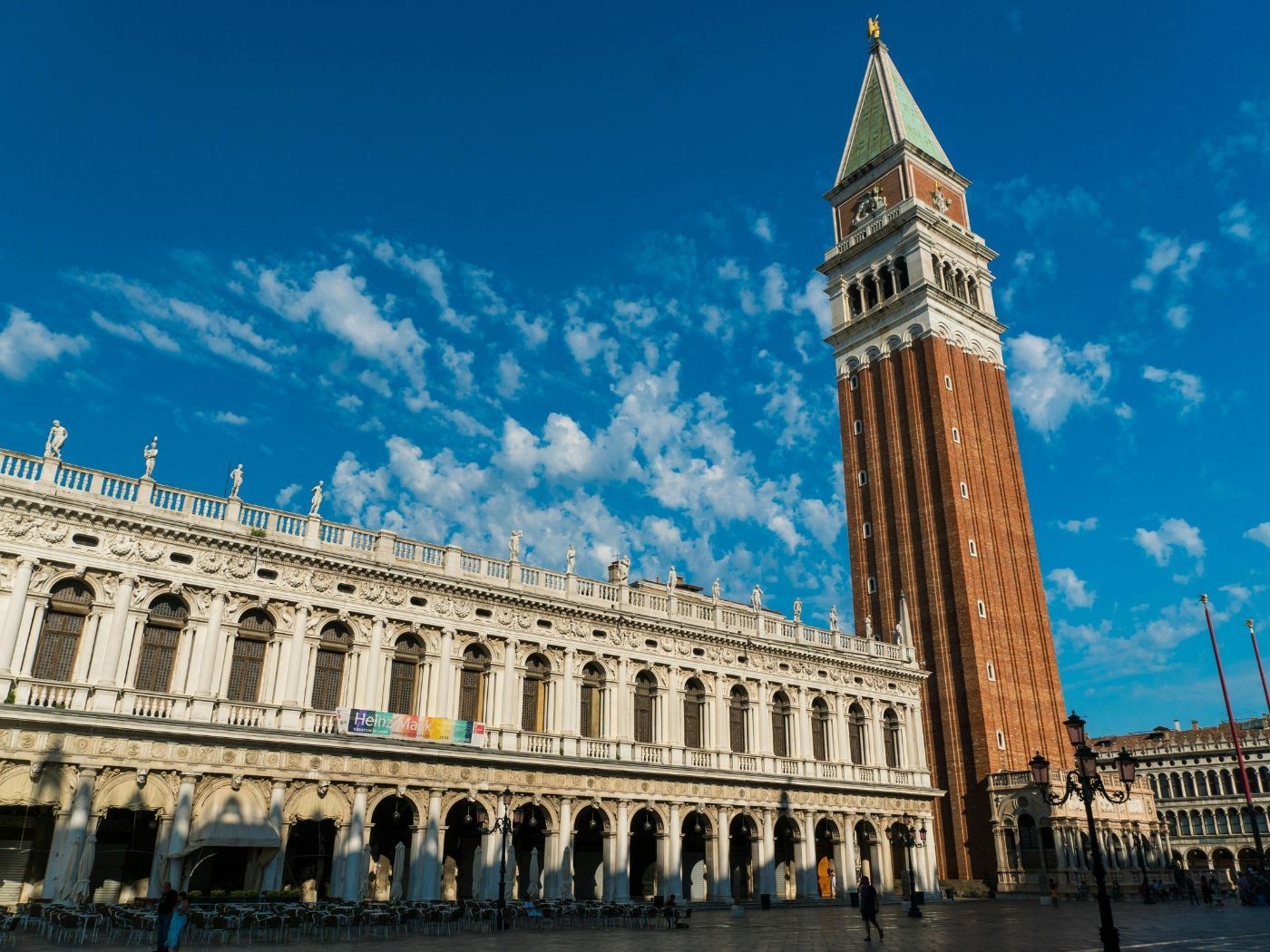
Known to Venetians as "El Paron de Casa" ("The Master of the House"), St. Mark's Bell Tower stands proudly in the centre of St. Mark's Square as the tallest structure in Venice. Originally built as a watchtower and lighthouse to guide ships safely through the Venetian Lagoon, the bell tower suffered repeated damage over the centuries, mainly from lightning strikes, and underwent several reconstructions. On 14 July 1902, the tower unexpectedly collapsed completely. Remarkably, no one was killed, apart from the caretaker's cat. The bell tower was faithfully rebuilt "where it was and as it was" (com'era, dov'era), and was officially reopened on 25 April 1912, the Feast of St. Mark. Today, the bell tower rises to 98.6 metres (323 ft), making it the tallest building in Venice. At its summit stands a magnificent golden weather vane depicting the Archangel Gabriel, which rotates with the wind. The white stone belfry houses five historic bells, each serving a specific purpose during the time of the Republic of Venice: Marangona – the largest and only bell to survive the 1902 collapse; it marked the beginning and end of the working day for the shipwrights (marangoni) of the Arsenal. Maleficio – the smallest bell, rung to announce death sentences. Nona – sounded every day at the ninth hour. Trottiera – called members of the Great Council to the Doge's Palace. Mezza Terza – announced meetings of the Senate of the Republic. Today, visitors can reach the top by lift (elevator) and enjoy one of the most spectacular panoramic views of Venice, stretching across the city's rooftops, the Grand Canal, the lagoon, and, on clear days, all the way to the Dolomite Mountains.
Doge's Palace
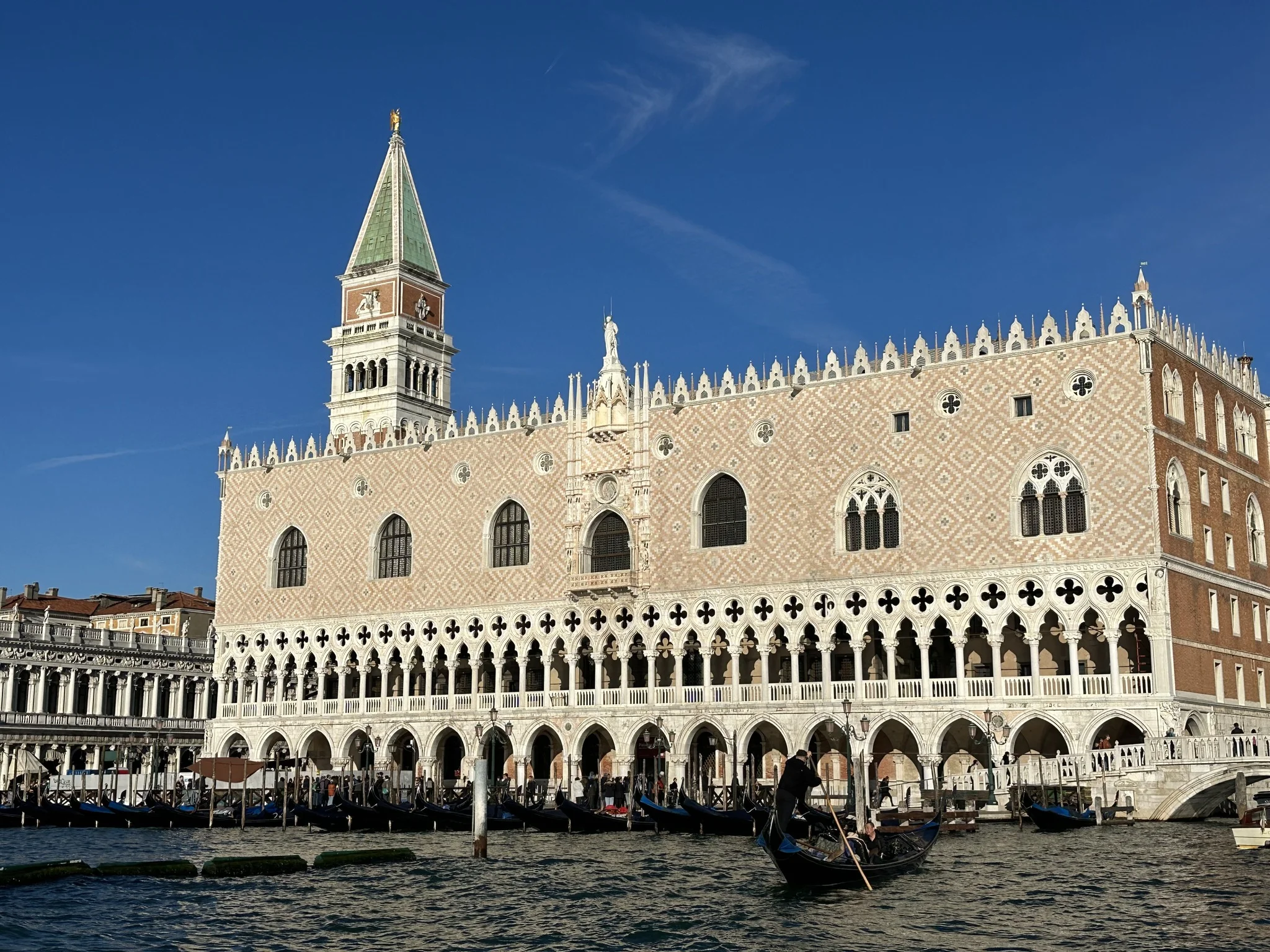
A masterpiece of Venetian Gothic architecture, the Doge's Palace stands majestically in St. Mark's Piazzetta and has long been one of the most powerful symbols of the glory and authority of the Republic of Venice. For centuries, it served as the official residence of the Doge, the political heart of the Republic, and the seat of Venice's most important government institutions and courts. Today, the palace is home to the Doge's Palace Museum, one of the most visited museums in Venice, where visitors can admire magnificent state rooms, priceless works of art, the Doge's private apartments, the historic prisons, and the famous Bridge of Sighs. The public entrance is through the Porta del Frumento (Grain Gate), so named because it once stood beside the former Grain Office, overlooking the St. Mark's Basin.
Marciana Library
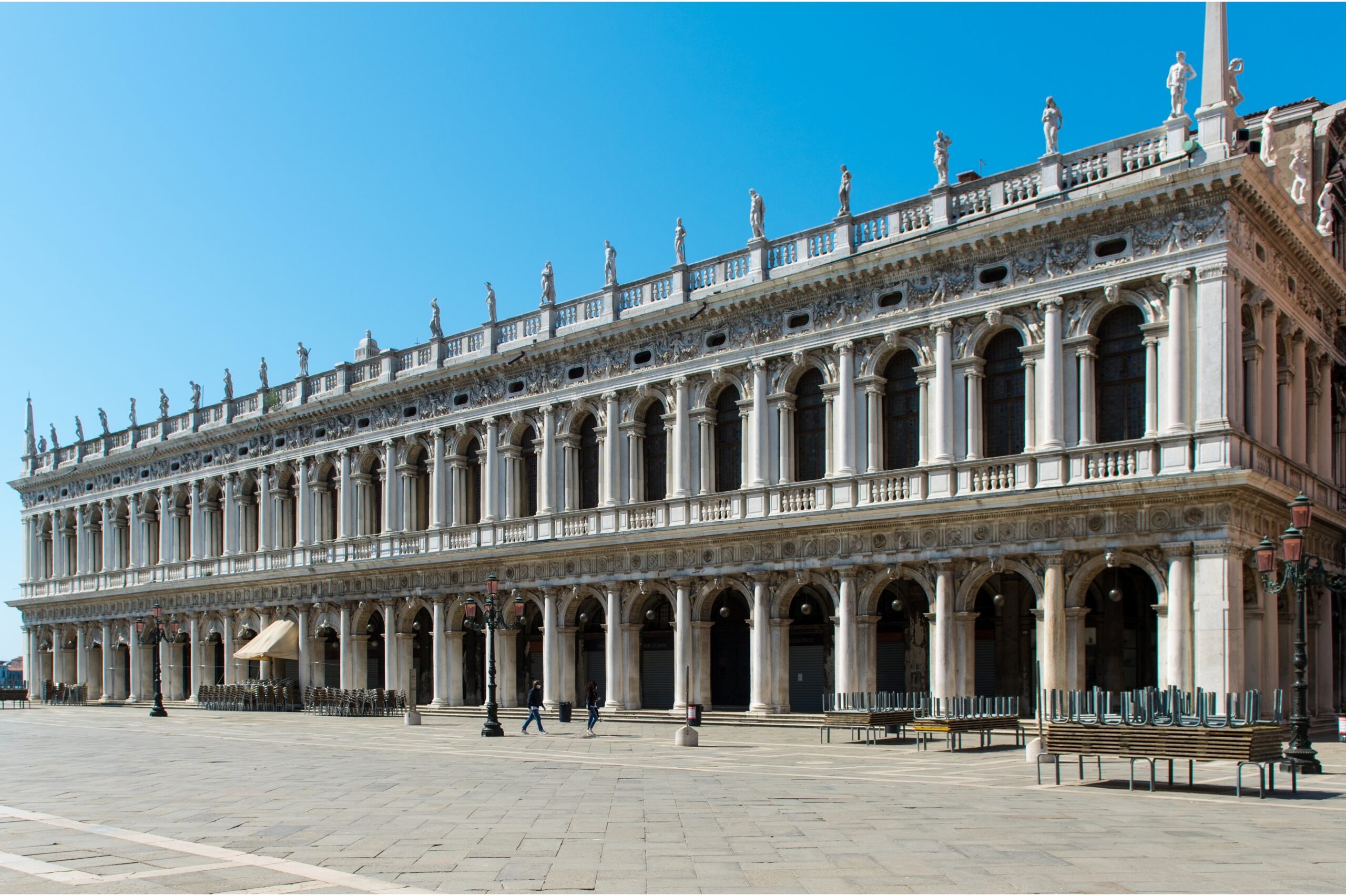
Better known as the Biblioteca di San Marco (St. Mark's Library), the Marciana Library stands in St. Mark's Piazzetta, the elegant square leading into the famous St. Mark's Square. Designed by the renowned architect Jacopo Sansovino in 1536, it was commissioned by Doge Andrea Gritti to house the extraordinary collection of manuscripts donated by the Greek Cardinal Bessarion, who offered them to the Republic of Venice as a gesture of gratitude for the city's hospitality. Today, the library preserves around one million volumes, including more than 13,000 manuscripts, making it one of Italy's most important historical libraries. It continues to serve scholars and researchers from all over the world and remains an invaluable treasure of Venice's cultural heritage.
Clock Tower
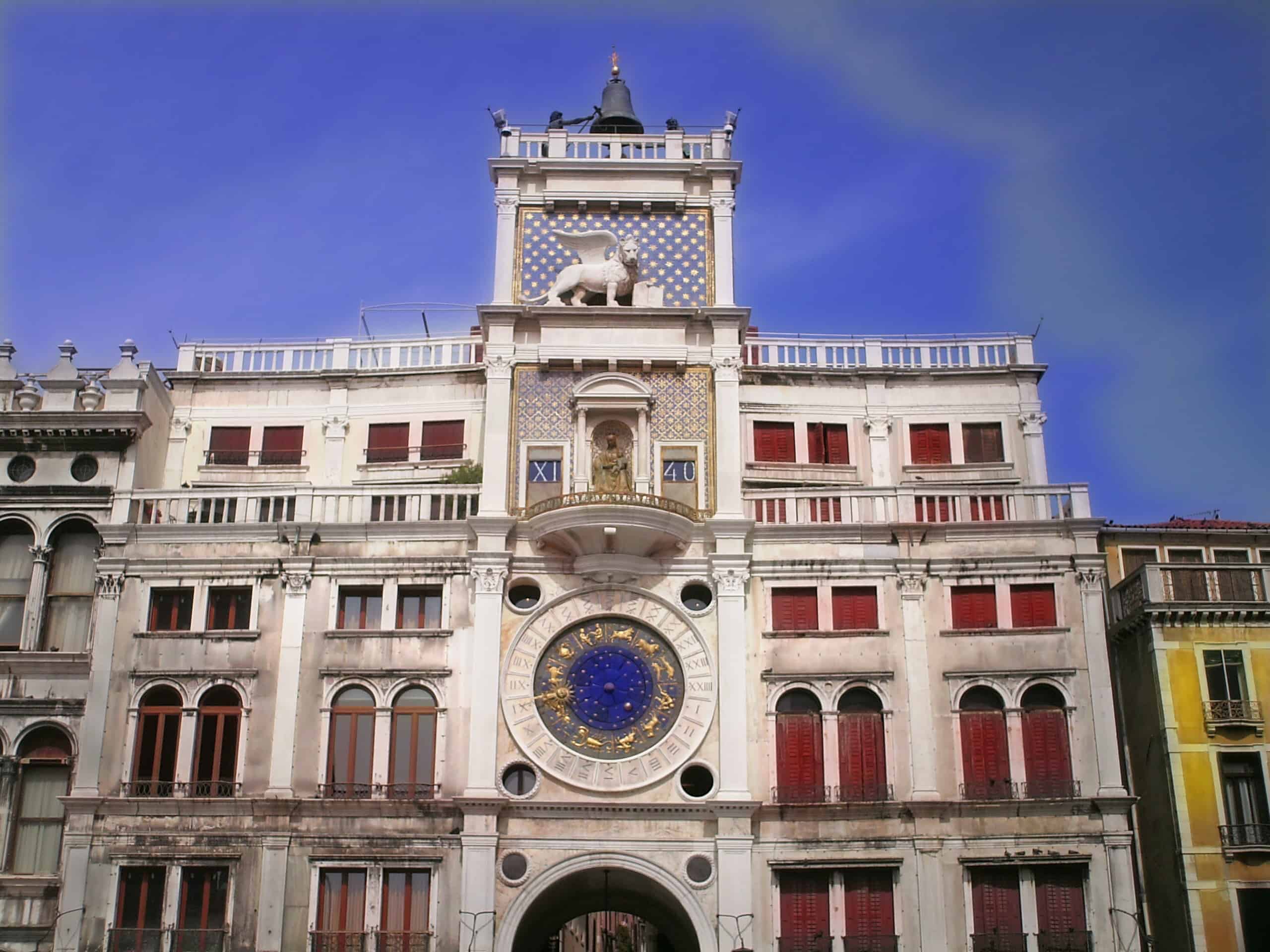
The Clock Tower, also known as the "Tower of the Moors" (Torre dei Mori), is one of the most iconic landmarks overlooking St. Mark's Square. Built in 1499 in the Renaissance style, it stands above the entrance to the ancient Merceria, once Venice's main commercial street and today the city's most famous shopping avenue. At the top of the tower is a terrace crowned by a large bell, struck every hour by two dark bronze statues known as the Moors. These figures represent two shepherds: the Old Moor, with a beard, and the Young Moor. Their movements symbolize the passage of time in a unique way. The Old Moor strikes the bell two minutes before the hour, representing the time that has passed, while the Young Moor strikes it two minutes after the hour, symbolizing the time yet to come. Below them stands the magnificent Winged Lion of St. Mark, the historic emblem of Venice, above a small semicircular balcony. During the annual Feast of the Sensa (Ascension Day), a procession featuring the Three Wise Men, led by an angel, emerges from this balcony each day for one week. Beneath the balcony is the extraordinary Astronomical Clock, decorated in gold and deep blue enamel. Designed according to the geocentric model of the universe, this remarkable Renaissance masterpiece displays the hours, the seasons, the phases of the moon, and the signs of the zodiac, making it one of the oldest and most fascinating astronomical clocks still in operation today.
Bridge of Sighs
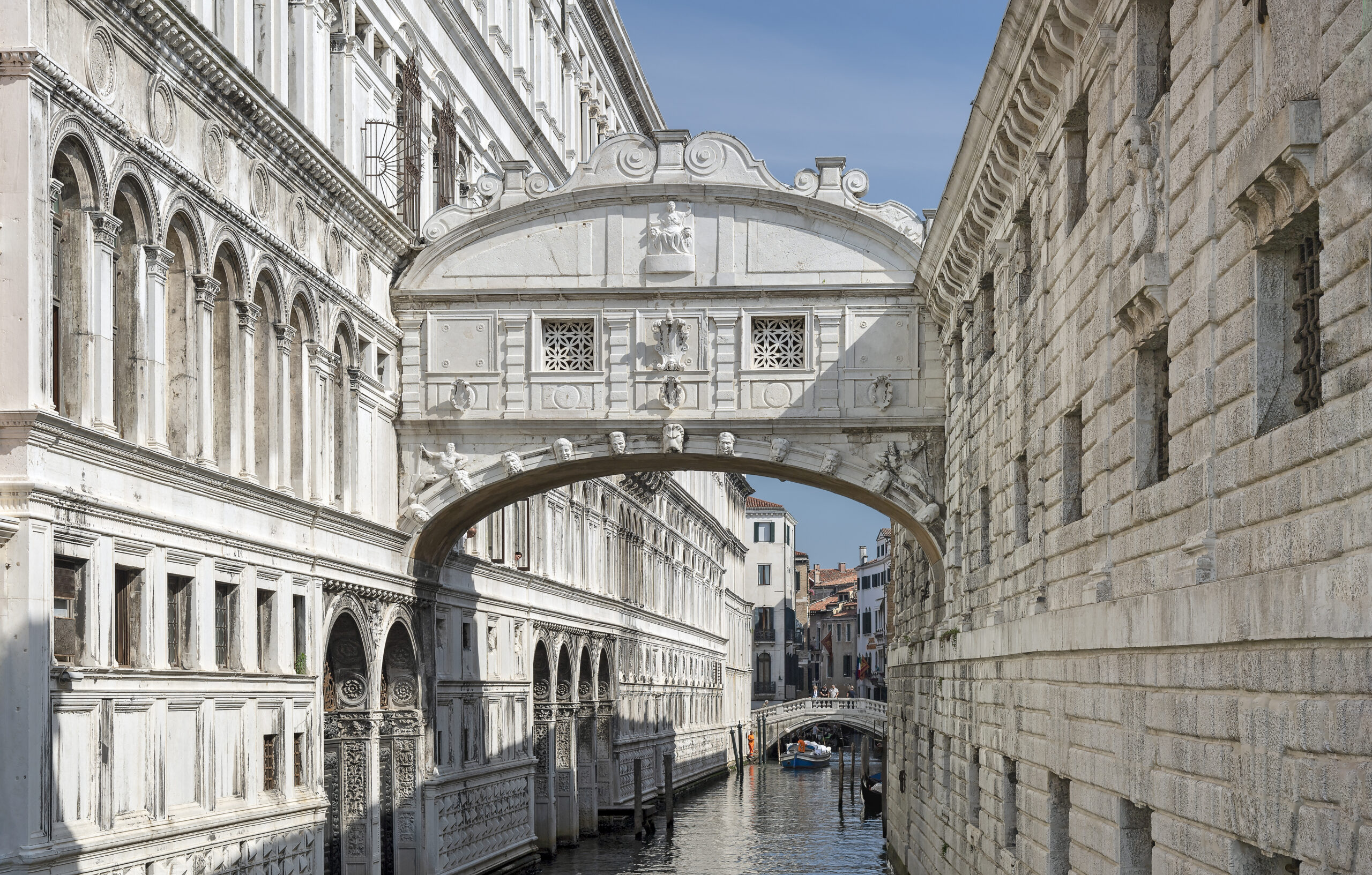
One of the most distinctive bridges in Venice, the Bridge of Sighs was built in 1602 by architect Antonio Contin, nephew of Antonio da Ponte, the designer of the Rialto Bridge. It connects the Doge’s Palace to the New Prisons. Designed as a covered, enclosed passageway, it ensured maximum security for the transfer of prisoners from the interrogation rooms of the State Inquisitors to the prison cells. Its name, “Bridge of Sighs,” comes from the romantic tradition that prisoners would sigh as they crossed it, catching their last glimpse of the outside world before imprisonment during the time of the Venetian Republic. The old prisons, known as the “Piombi” (Leads), were particularly harsh, as their cells were located directly beneath a lead roof—making them extremely hot in summer and cold in winter. Today, however, the bridge is considered one of Venice’s most romantic landmarks and is often referred to as the “Bridge of Love” or the “Bridge of Lovers.” It can be beautifully viewed and photographed from the Ponte della Canonica and the Ponte della Paglia, two of the best vantage points in the city.
Rialto Bridge
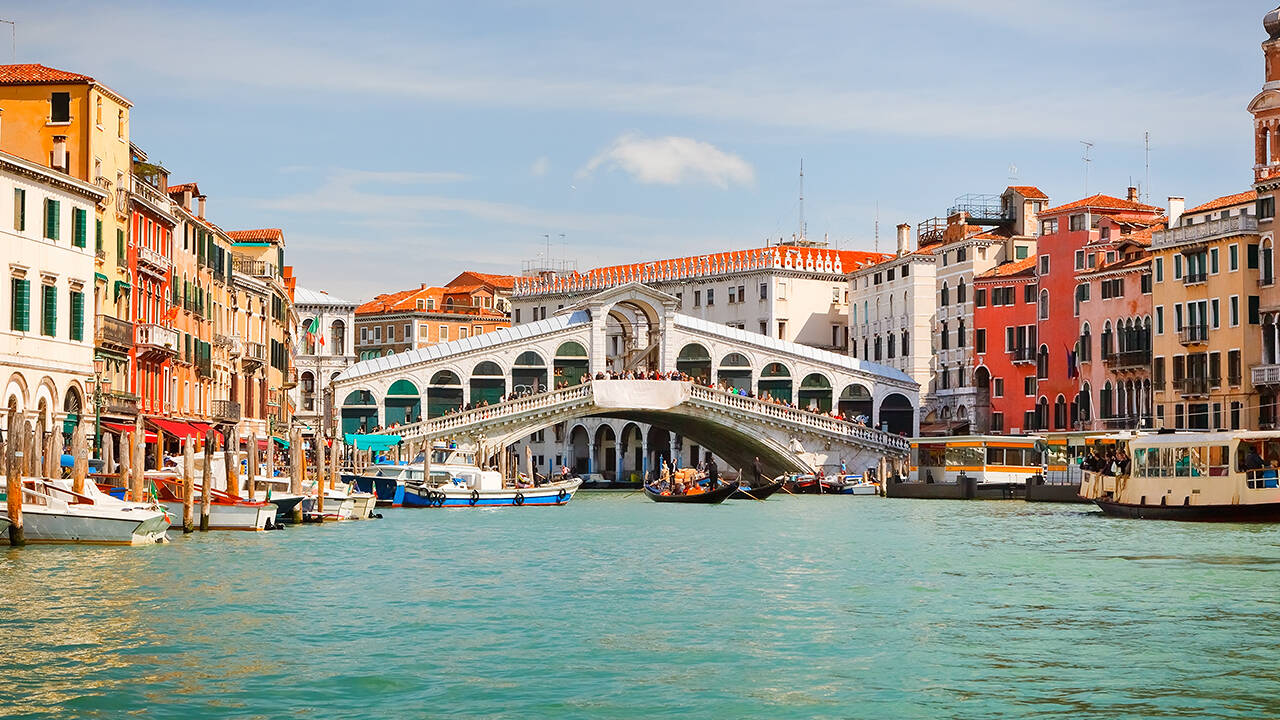
The oldest and most famous of the four bridges crossing the Grand Canal, the Rialto Bridge was originally conceived as a simple boat bridge connecting the two banks of Venice’s main waterway. In 1264, it was rebuilt on wooden piles by Nicolò Barattieri, replacing the earlier floating structure. However, the high maintenance costs of the wooden bridge eventually led the Republic of Venice to launch a competition in 1554 for its replacement with a stone bridge. Some of the most renowned architects of the time took part in the project, including Michelangelo, Andrea Palladio, and Jacopo Sansovino. After several debates and revisions, the commission was awarded to the Venetian engineer Antonio da Ponte, whose design was ultimately approved. Construction was completed in 1591, creating the iconic structure admired today around the world. The bridge features 24 shops arranged along both sides, while its layout includes three walkways: a wide central staircase of about 10 metres, and two narrower side ramps approximately 3 metres wide. Since its completion, the bridge has never experienced structural issues, and maintenance work has been limited to the preservation of its marble surfaces.
Rialto Market
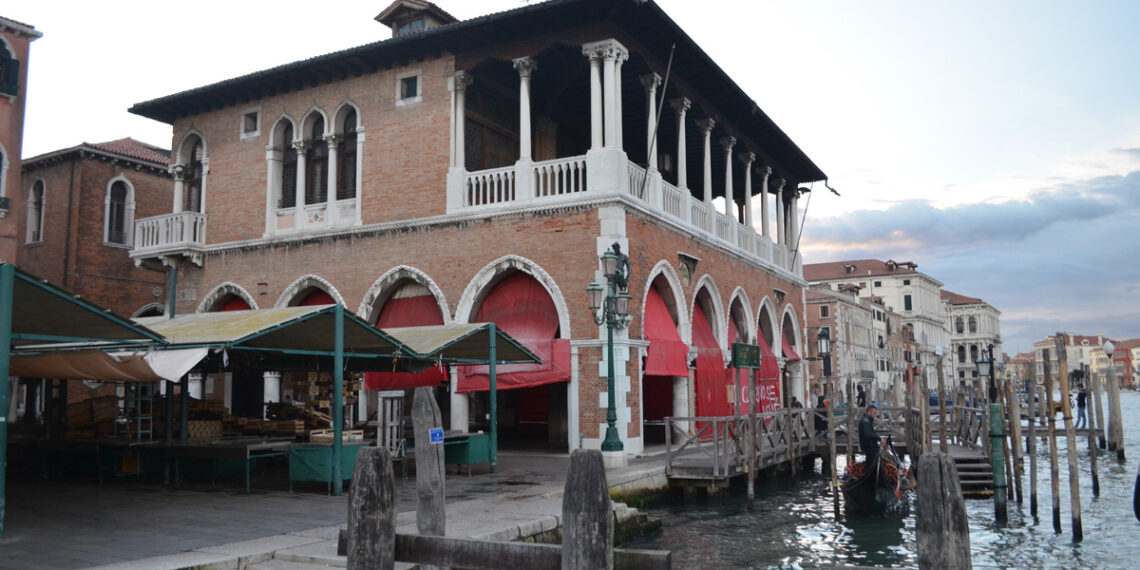
The Rialto Market is the oldest and most famous market in Venice, and for centuries it has been the city's commercial heart. It consists of two historic sections: the fruit and vegetable market (Erbaria) and the famous fish market (Pescheria). Located just a few steps from the Rialto Bridge, between Campo de la Pescheria and Campo San Giacometo, the market is entered through a beautiful Gothic portico that opens onto the lively square. Here, visitors can admire the historic bell tower and the large clock that once marked the opening and closing hours of the market. Nearby stands the famous Gobbo di Rialto ("The Hunchback of Rialto"), a small stone statue supporting a staircase leading to the Pietra del Bando ("Stone of Proclamations"). From this platform, public officials once announced the laws, decrees, and important decisions of the Republic of Venice, including criminal sentences. Today, the Rialto Market remains one of the city's most authentic and vibrant places, where locals and visitors alike gather each morning to experience the true spirit, flavours, and traditions of Venice.
Gallerie dell'Accademia
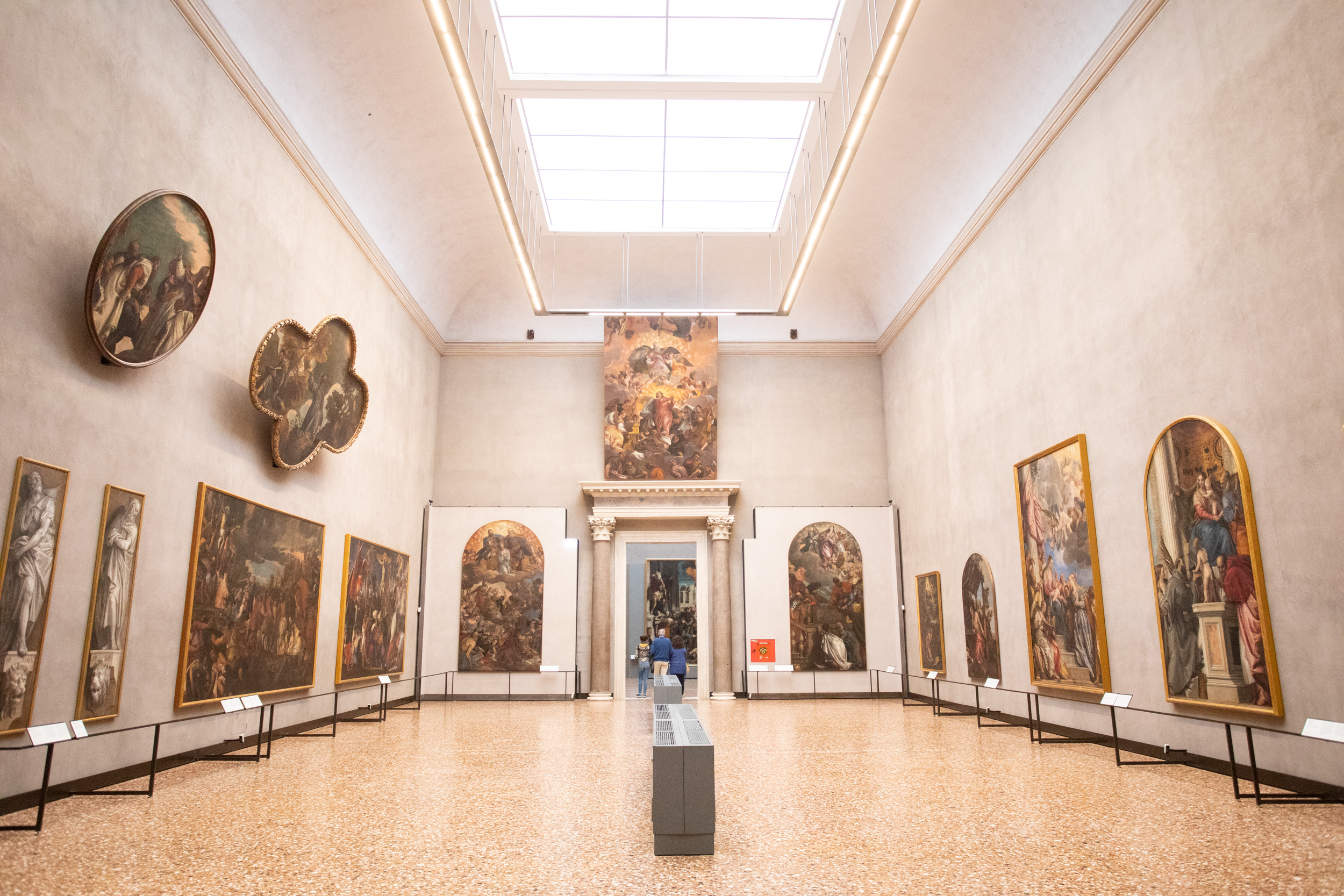
Home to the world's finest collection of Venetian art, the Gallerie dell'Accademia is an unmissable destination for anyone wishing to discover the artistic history of Venice. The museum is housed within the historic Scuola Grande di Santa Maria della Carità, the adjoining church, and the former Lateran Canons' Monastery, in the Dorsoduro district, at the foot of the Accademia Bridge. Its extraordinary collection offers a unique journey through Venetian Renaissance and Baroque art, featuring masterpieces by Titian, Veronese, Canaletto, Bellini, Tintoretto, Giorgione, and many other celebrated artists who shaped the history of Venetian painting. Officially opened to the public in 1817, the Gallerie dell'Accademia remains one of Italy's most important art museums and the best place to admire the evolution of Venetian painting from the 14th to the 18th century.
Galleria Giorgio Franchetti alla Cà d'Oro
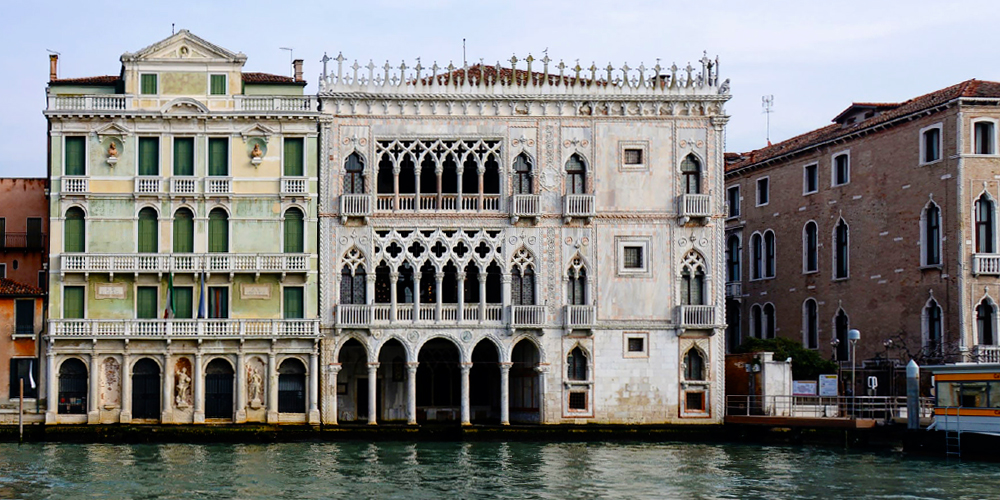
Ca' d'Oro is one of the most prestigious and best-preserved palaces in Venice. This magnificent former noble residence was built in 1442 for Marino Contarini, Procurator of St. Mark, by the architects Giovanni and Bartolomeo Bon in the Venetian Gothic style. Overlooking the Grand Canal, in the Sestiere of Cannaregio, the palace owes its name—meaning "House of Gold"—to the fact that its façade was once adorned with gold leaf. Today, although the gold has disappeared, its elegant white and pink marble façade remains one of the finest examples of Venetian Gothic architecture. Today, the palace houses the Galleria Giorgio Franchetti, which displays the remarkable art collection assembled by Baron Giorgio Franchetti, including masterpieces by Titian, Giorgione, and many other celebrated artists.
Peggy Guggenheim Collection
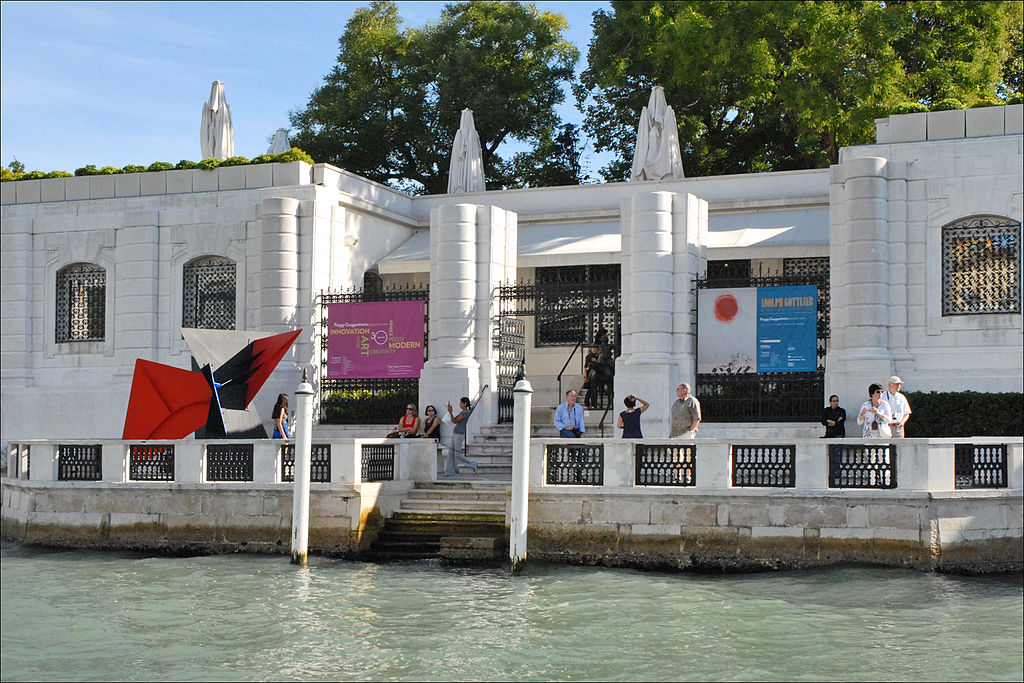
The Peggy Guggenheim Collection is one of the world's most important museums of modern art, beautifully located on the banks of the Grand Canal. The museum is housed in Palazzo Venier dei Leoni, the former home of the American art collector Peggy Guggenheim, who lived here for more than thirty years. Today, visitors can admire Peggy Guggenheim's remarkable personal collection alongside masterpieces by some of the greatest artists of the 20th century, including Pablo Picasso, Salvador Dalí, Wassily Kandinsky, Jackson Pollock, Umberto Boccioni, and many other internationally renowned artists. A visit to the museum offers a fascinating journey through the most influential movements of modern art, making it an essential stop for art lovers visiting Venice.
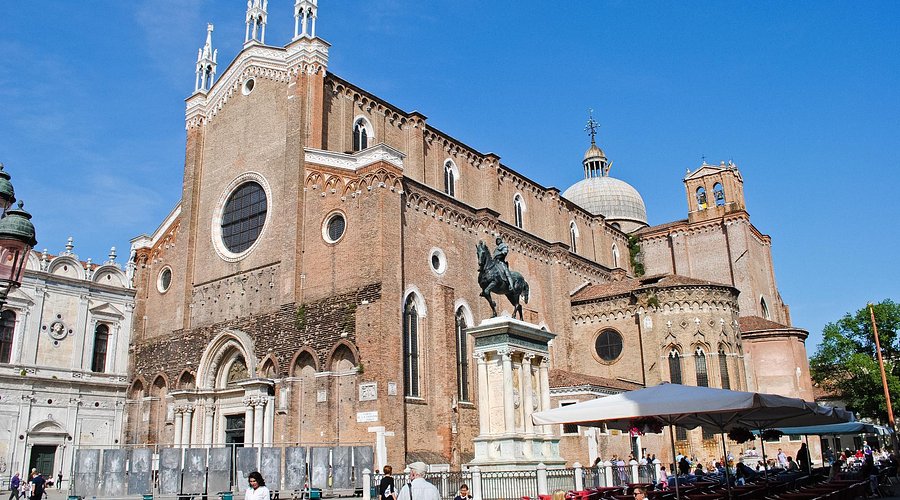
Basilica of Saints John and Paul
The Basilica of Saints John and Paul, affectionately known by Venetians as San Zanipolo, is one of the most impressive churches in Venice and the second largest after St. Mark's Basilica. Often referred to as the Pantheon of Venice, it is the final resting place of 25 Doges and many of the Republic's most distinguished military leaders, artists, and noble families. The basilica stands in the beautiful Campo Santi Giovanni e Paolo, in the Sestiere of Castello, sharing the square with the magnificent Renaissance façade of the Scuola Grande di San Marco and the famous Equestrian Statue of Bartolomeo Colleoni. According to tradition, Doge Jacopo Tiepolo experienced a vision that inspired him to donate the nearby Oratory of San Daniele to the Dominican friars in 1234. The Dominicans, who had already been established in Venice for more than a decade, immediately began building a new church dedicated to the 4th-century Roman martyrs Saints John and Paul. Over the following centuries, the basilica was gradually enlarged and was finally consecrated in 1430. It was richly adorned with paintings, sculptures, magnificent funerary monuments, and works of art, becoming one of the most important religious buildings in Venice. During the Napoleonic occupation, many of its artistic treasures were removed and the Dominican community was suppressed. In the years that followed, generous donations from the noble families whose ancestors were buried in the basilica gradually restored its splendour. Today, every corner of the church is filled with remarkable works of art, making San Zanipolo one of Venice's most fascinating historical and artistic treasures.
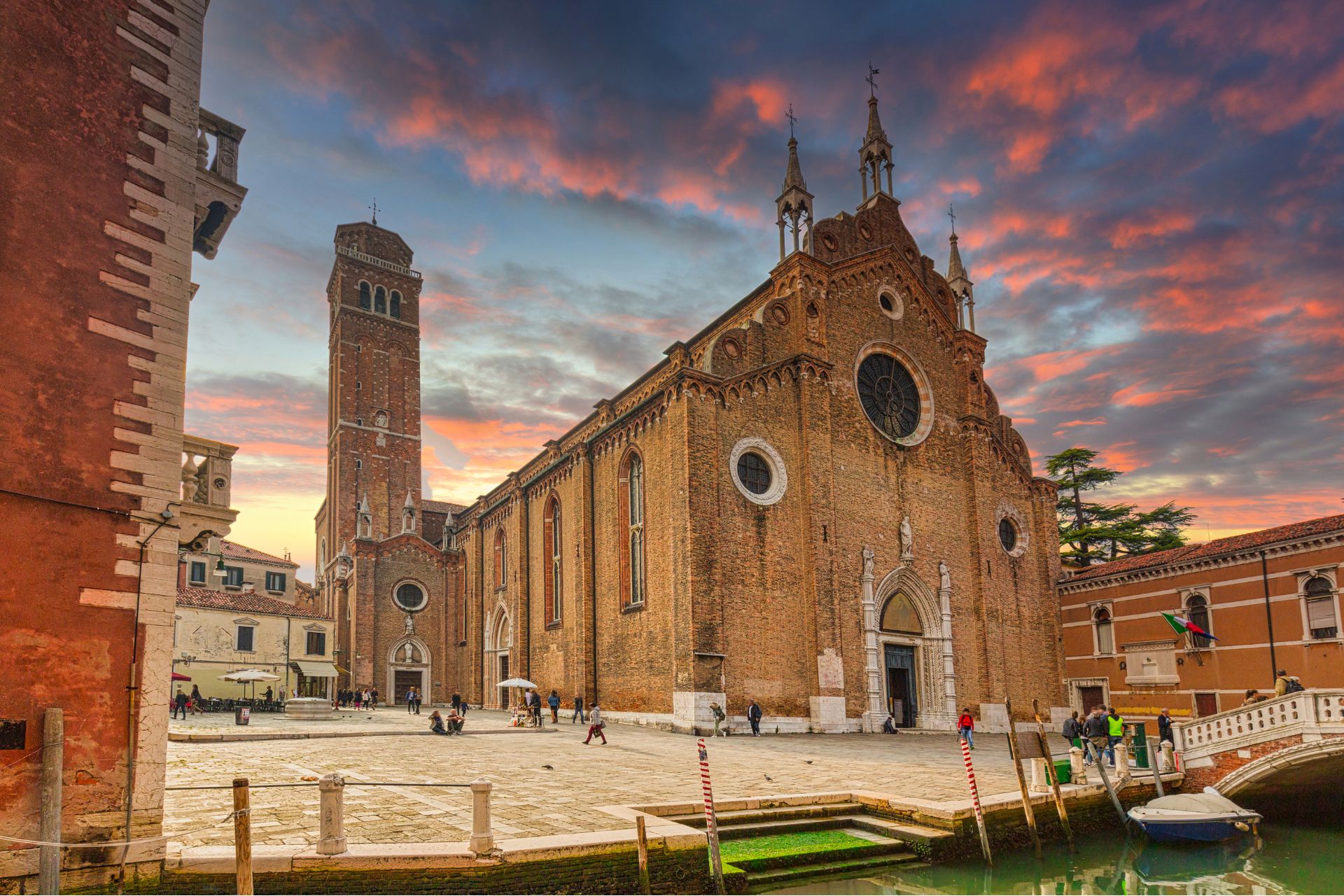
Basilica of Santa Maria Gloriosa dei Frari
The Basilica of Santa Maria Gloriosa dei Frari, commonly known as the Frari Church, is dedicated to the Assumption of Mary and is located in the square of the same name in the Sestiere of San Polo. A masterpiece of Venetian Gothic architecture, it is the third largest church in Venice, after St. Mark's Basilica and the Basilica of Saints John and Paul. Built by the Franciscan Order (Friars Minor), it was completed in 1443 and consecrated in 1492. The Frari is also one of Venice's richest churches in terms of artistic heritage, second only to St. Mark's Basilica. Inside, it preserves the tombs of Antonio Canova and Titian, along with extraordinary masterpieces such as Titian's monumental “Assumption of the Virgin”, Bellini's “Madonna and Child with Saints”, and Titian's “Madonna di Ca’ Pesaro”, as well as a wooden statue by Donatello. The basilica is an outstanding example of austere yet majestic beauty, characterized by pure and essential lines. It follows a Latin cross plan divided into three naves by twelve pillars supporting pointed Gothic arches, connected by wooden tie beams that ensure structural stability while preserving its elegant simplicity.
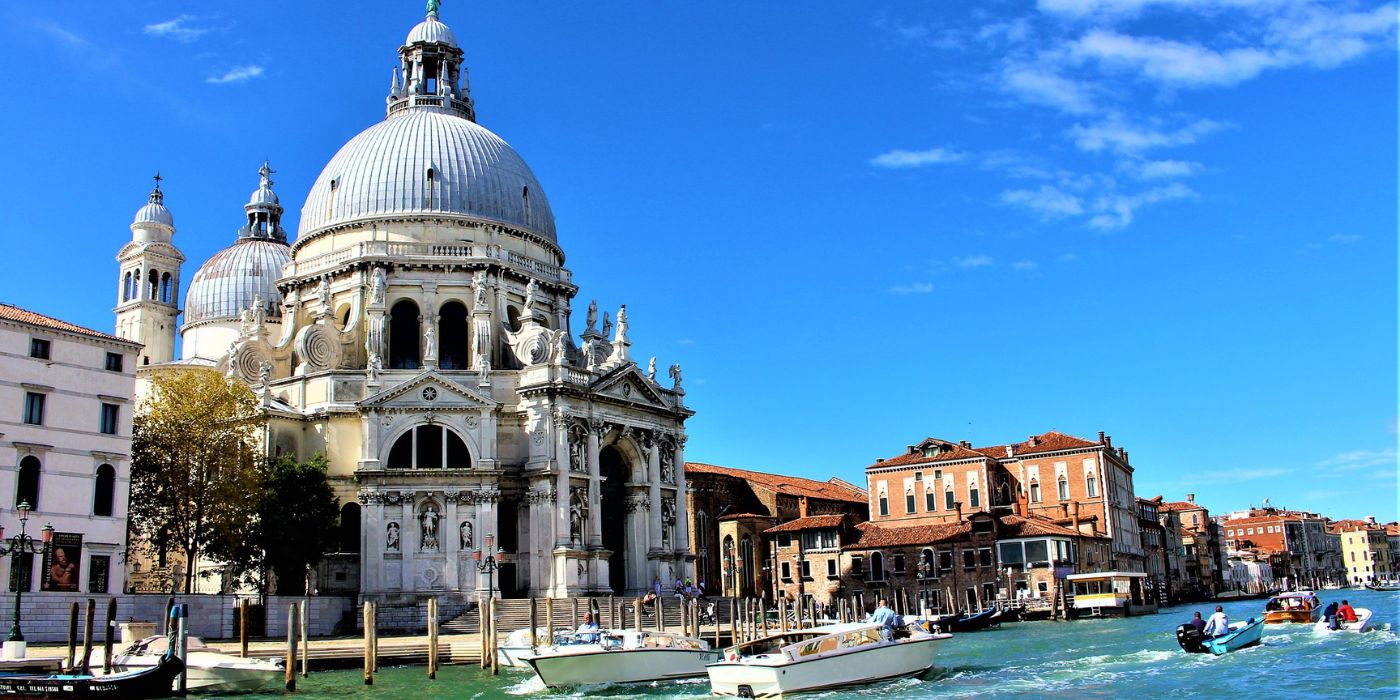
Basilica of Santa Maria della Salute
Commonly known as “La Salute”, the Basilica of Santa Maria della Salute was built by Baldassare Longhena and completed in 1687 as a votive offering of gratitude to the Virgin Mary for delivering Venice from one of the worst plague outbreaks in its history. Like the nearby Basilica of the Redentore, it was commissioned by the Republic of Venice after the devastating epidemic of 1630–1631, which caused approximately 80,000 deaths in Venice and around 600,000 across the territories of the Serenissima Republic. Since then, every year on 21 November, Venice celebrates the deeply cherished Festa della Madonna della Salute. During this event, a spectacular temporary bridge—traditionally built from boats—connects the basilica, located near Punta della Dogana at the entrance of the Grand Canal close to St. Mark’s Basin, with the opposite shore of St. Mark’s area. The basilica features an octagonal plan, entirely clad in Istrian stone, and is crowned by two domes and flanked by two bell towers. Its interior is truly breathtaking: six chapels open around the central space, covered by a high dome supported by eight massive pillars, each decorated with sculptural elements. Along the eight sides of the building are the main entrance, three altars on the right (dedicated to the Nativity, the Assumption, and the Presentation of the Virgin in the Temple), and three altars on the left (the Descent of the Holy Spirit, Saint Anthony, and the Annunciation). Facing the entrance is the main altar, dominated by a powerful sculpture of the Virgin Mary holding the Child, symbolising Salvation and protection over Venice from the plague.
Venetian Arsenale
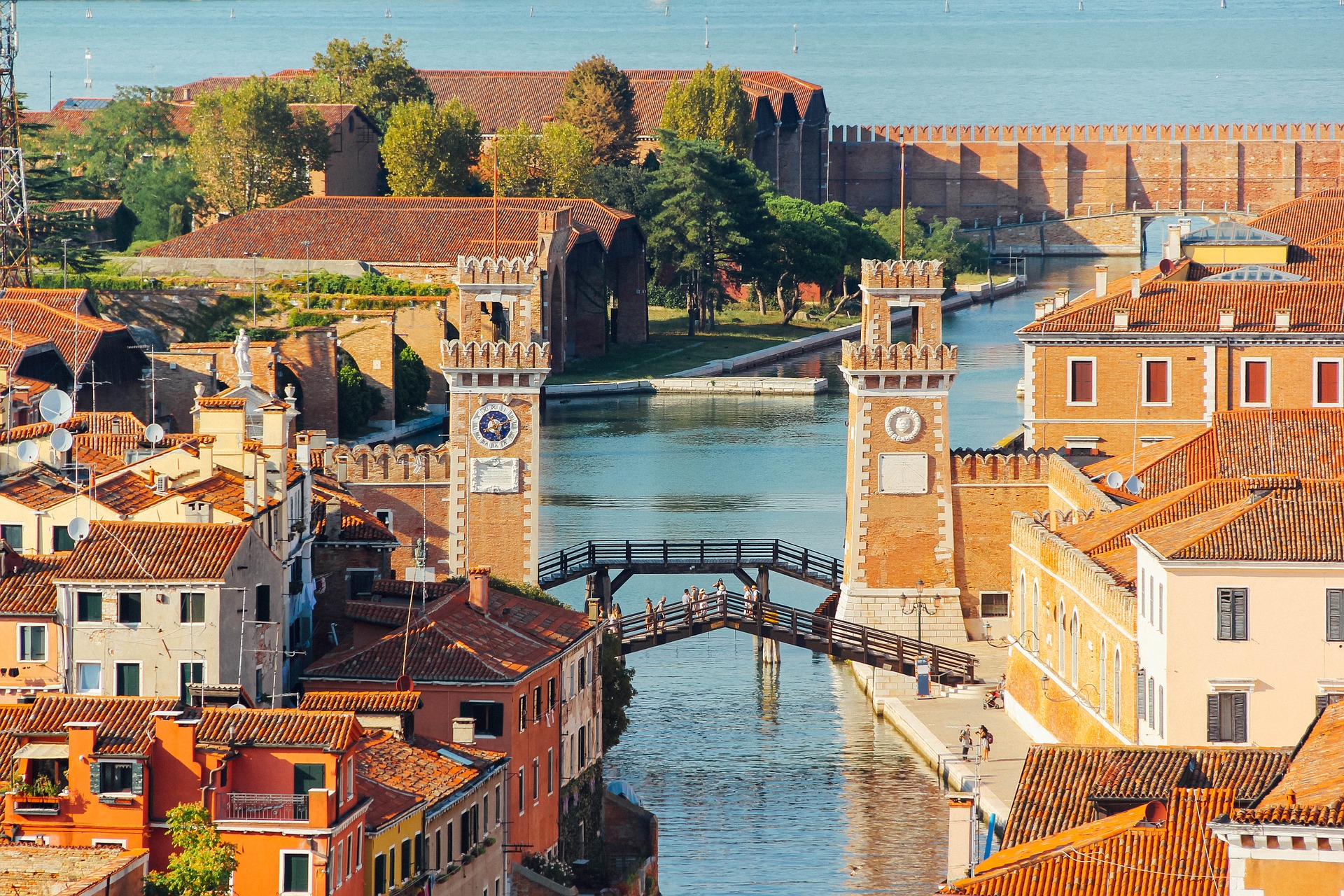
The Venetian Arsenal (Arsenale di Venezia) is a vast historic complex of shipyards and workshops that once formed the beating heart of the naval power of the Serenissima Republic of Venice. It was here that the ships of Venice were built, maintained, and launched, helping to establish the Republic as one of the most powerful maritime empires in the world for centuries. Located in the north-eastern part of Venice, the Arsenal occupies nearly 15% of the city's surface area. At its peak, it employed up to 15,000 workers, known as arsenalotti, who carried out highly specialised tasks in shipbuilding and naval production. The term “Arsenal” derives from the Arabic dār aṣ-ṣināʿa, meaning “house of industry”, which evolved through Venetian dialect forms such as darzanà, then arsenàl, eventually becoming the modern word Arsenale. The related term darsena still refers today to the internal basins of the complex. Originally developed near St. Mark’s Square, the Arsenal was later moved to the Sestiere of Castello, between San Pietro di Castello and San Giovanni in Bragora, thanks to the availability of large water spaces and its proximity to timber transport routes from the forests of Cadore and Montello, which arrived in Venice via the River Piave. This strategic location profoundly influenced the development of the city. Around the Arsenal, residential buildings were constructed to house workers, ensuring a highly efficient and readily available workforce. Shipbuilders, blacksmiths, rope makers, sawyers, and naval architects made the Arsenal famous throughout the world, producing the legendary galleys (oared war and trade ships) and the powerful galeasses—large hybrid warships that combined the features of galleys and galleons. These vessels played a crucial role in major naval battles, including the Battle of Lepanto (1571) under the Venetian command of Sebastiano Venier. By the 14th century, production capacity had tripled, and the impressive Porta Magna (Main Gate) was built—the first example of Renaissance architecture in Venice. The complex was later expanded into “new” and “newest” sections to increase efficiency, functioning in a way that strongly resembled a pre-industrial assembly line system, centuries ahead of its time. Thanks to its organisation and innovation, the Venetian Arsenal is considered one of the earliest examples of a large-scale industrial production system in history, where specialised workers carried out sequential stages of manufacturing using standardised components. A historic inscription still preserved within the complex recalls its origins: “In 1104, when the Venetian armies, eager for glory and conquest, occupied the shores of Syria, this Arsenal was founded.” Today, the Arsenal remains one of Venice’s most important historical sites, symbolising the city’s maritime genius, technological innovation, and extraordinary naval power.
Murano Island
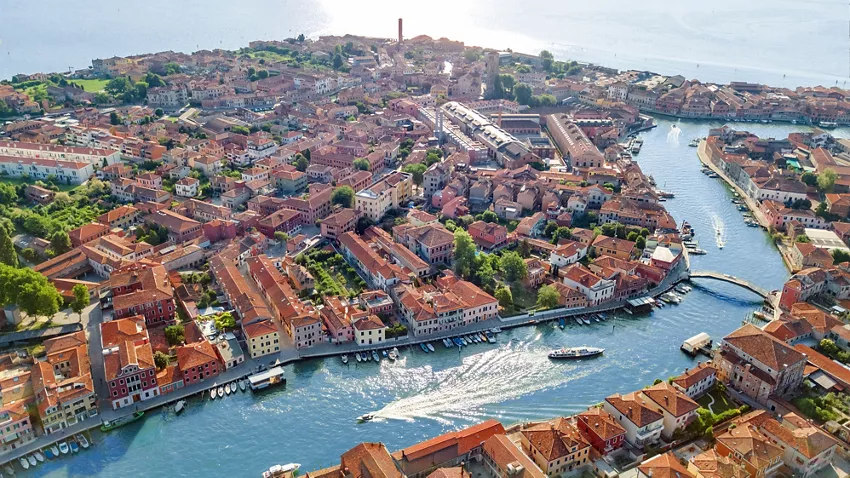
Murano Island is world-famous for its centuries-old tradition of glassmaking. Formed by seven small islands connected by bridges, it is the largest island in the Venetian Lagoon after Venice itself. Glass production has been the island’s main activity for hundreds of years. Here, visitors can find numerous workshops and artisan studios, where it is possible to watch live demonstrations of the traditional glassblowing technique, an ancient craft that has made Murano renowned across the world. The island is also home to the Murano Glass Museum, which showcases more than 4,000 exhibits, tracing the history and evolution of glassmaking from antiquity to the present day. A visit to Murano offers a fascinating glimpse into one of Venice’s most precious artistic traditions, where craftsmanship, creativity, and heritage are still alive today.
Burano Islannd
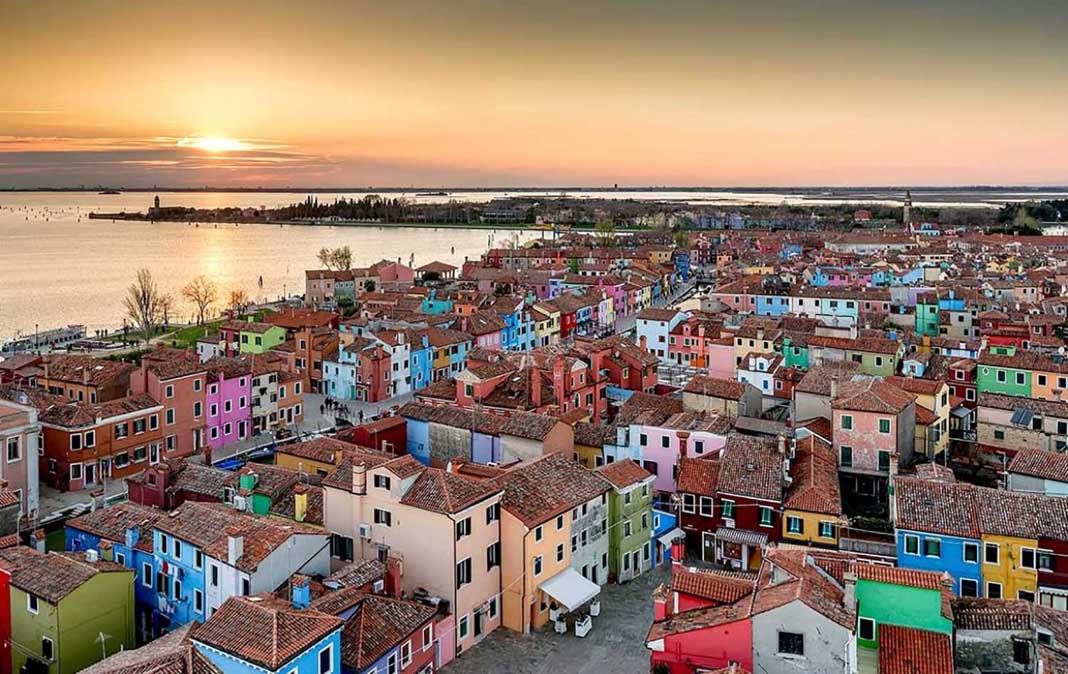
Burano Island is one of the most beautiful islands in the Venetian Lagoon (for many visitors, the most charming of all), renowned worldwide for its tradition of lace-making and its brightly painted, colourful houses. According to tradition, the vivid colours of the houses were originally chosen by fishermen and sailors so they could easily recognise their homes even during the thick fog that often covers the lagoon. Although small in size, Burano can be explored in just a few hours, yet it offers an unforgettable experience. Its unique atmosphere, peaceful canals, and vibrant reflections make it one of the most picturesque and photogenic places in the entire Venetian Lagoon, and truly a destination not to be missed.
Torcello Island
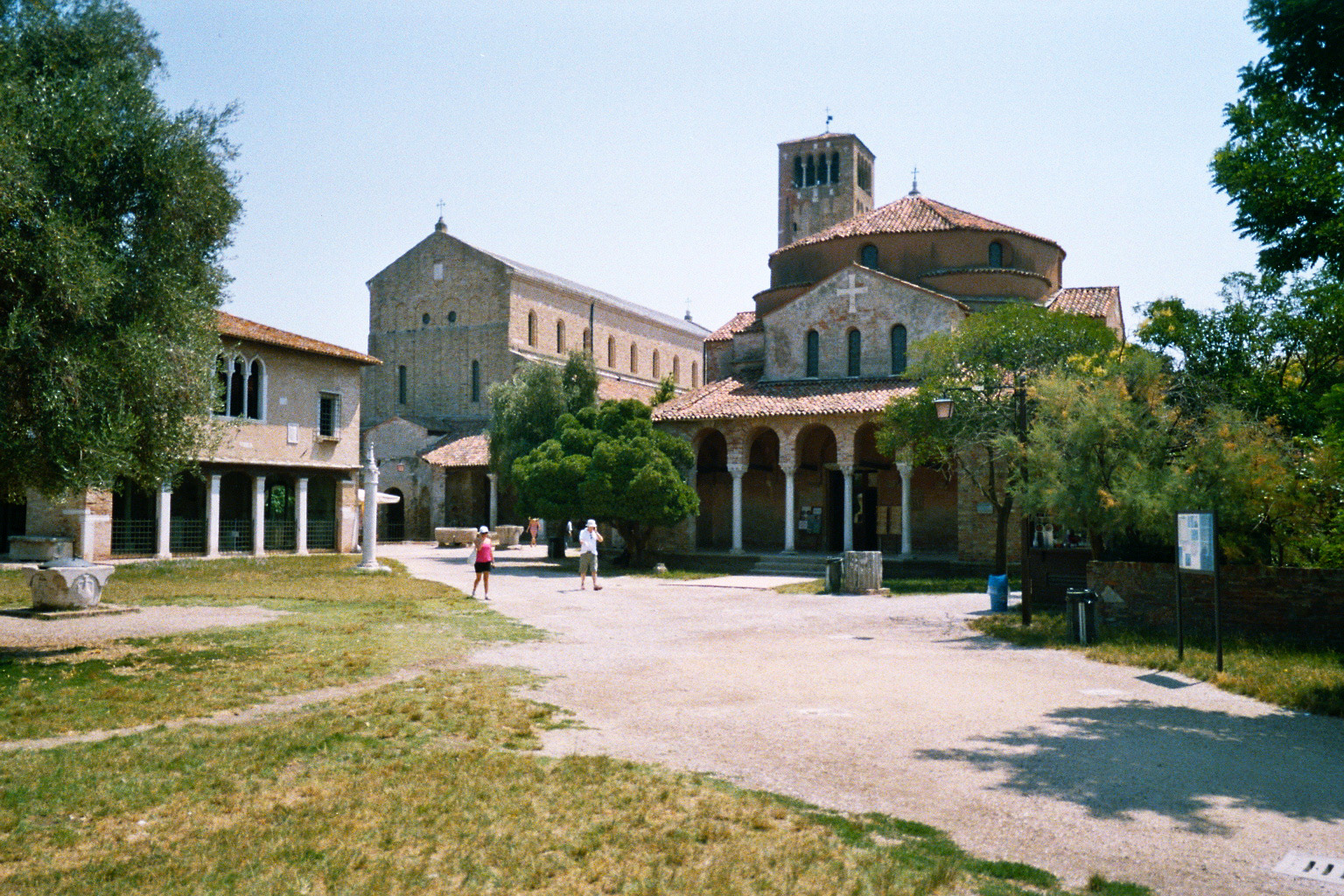
Torcello Island is the oldest continuously inhabited island in the Venetian Lagoon and is considered the cradle of Venetian civilization. Long before Venice rose to prominence, Torcello was the lagoon's most important settlement, welcoming thousands of people who fled invasions by the Huns and the Lombards on the mainland. Today, the island is a peaceful oasis where visitors can discover some of the lagoon's oldest and most significant monuments. Its greatest treasure is the Basilica of Santa Maria Assunta, founded in the 7th century, renowned for its magnificent Byzantine mosaics and regarded as the oldest cathedral in the Venetian Lagoon. Another famous attraction is the Throne of Attila, an ancient stone seat traditionally associated with the legendary King of the Huns. Although historians agree that it was almost certainly never used by Attila, the legend has endured for centuries and remains one of Torcello's most fascinating stories. With its tranquil atmosphere, ancient history, and remarkable heritage, Torcello offers a completely different side of the Venetian Lagoon, far removed from the crowds of Venice.
Grand Canal
The Grand Canal is the magnificent waterway that has shaped the history of Venice for centuries. Affectionately known by Venetians as "Il Canalasso", it divides the city into two halves, tracing its distinctive reverse "S" through the historic centre. Stretching for approximately 3.8 kilometres (2.4 miles), the Grand Canal varies between 30 and 70 metres in width, with an average depth of about 5 metres. It extends from the foot of the Ponte della Libertà, the bridge connecting Venice to the mainland, to the St. Mark's Basin. Lined with some of the most magnificent palaces in Europe, the Grand Canal is an open-air museum showcasing masterpieces of Byzantine, Gothic, Renaissance, and Baroque architecture, reflecting the extraordinary wealth and prestige of the Republic of Venice throughout the centuries. The canal is crossed by four bridges: the Rialto Bridge, the Accademia Bridge, the Scalzi Bridge, and the Constitution Bridge, also known as the Calatrava Bridge, the most recently built. One of the best ways to experience the Grand Canal is aboard a vaporetto (water bus), travelling from Santa Lucia Railway Station to St. Mark's Square, allowing you to admire its magnificent palaces from the water. For an even more unforgettable experience, a gondola ride offers a unique and intimate perspective of both the Grand Canal and the timeless beauty of Venice.